Blog Summary:
Traditional paper-based stamping methods are rapidly becoming obsolete in an economy that is becoming more and more digital. The evolution of eStamping, a secure, government-authorized digital stamping process, has been facilitated by India’s transition to a structured, technology-driven governance ecosystem. This process is intended to improve compliance, reduce delays, and eliminate fraud.
This blog delves into the ins and outs of eStamping in India, including its legal validity, benefits, distinctions from traditional stamp paper, and the ways in which organizations can simplify compliance by utilizing a top-tier digital stamping platform such as TRUESigner ONE. This guide will offer comprehensive guidance regardless of whether you are responsible for managing bulk documents for stamping or managing individual agreements.
Introduction
India’s documentation and compliance ecosystem has historically depended on physical stamp papers as evidence of duty payment in accordance with the Indian Stamp Act. Nevertheless, physical stamp paper has historically been associated with challenges such as counterfeit risks, manual inefficiencies, supply shortages, and logistical delays.
To resolve these concerns, the Government of India implemented an electronic stamping system, which is commonly referred to as eStamping, to automate the authentication of documents and the payment of stamp duty.
Currently, digital stamping is revolutionizing the management of legally binding documentation by businesses, legal professionals, banks, NBFCs, fintech platforms, and enterprises. eStamping Services are becoming increasingly essential to India’s compliance infrastructure as a result of the proliferation of automation, remote onboarding, and digital contracts.
As India develops into a $5 trillion digital economy, the legal foundation of secure digital transactions is being established by eStamping platforms and integrated eSign solutions.
Understanding Stamping in the Indian Legal Framework
Legal documents are legally enforced by paying stamp duty, which is referred to as stamping. In essence, stamp duty is a tax that the government imposes on specific types of transactions, including property transfers, loan agreements, lease deeds, partnership agreements, affidavits, and corporate contracts. The primary objective of stamping is to guarantee the collection of government revenue and establish legal authenticity.
Prior to execution, conventional stamping models necessitated the acquisition of physical stamp papers and their attachment to documents. Black-market circulation, tampering, and duplication were all potential threats to this system after years of service. However, the stamping infrastructure necessitated immediate reform, as evidenced by the notorious stamp paper scams of the past. This requirement led to the structured implementation of eStamping services and digital stamping.
What is eStamping?
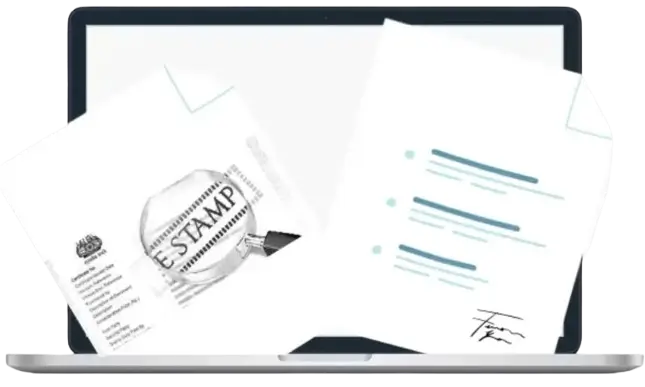
Stamp duty is paid digitally through eStamping, which generates an electronically issued stamp certificate. Instead of purchasing physical stamp paper, businesses or individuals can pay stamp duty online through authorized channels and receive a digitally generated certificate that includes a unique identification number.
Proof of payment for the necessary stamp duty is provided by the eStamp certificate. It comprises certain information, including the certificate number, date and time of issuance, state code, transaction reference number, stamp duty amount, and document description. A centralized database securely records each certificate, thereby substantially reducing the likelihood of fraud or duplication.
Government-designated authorized agencies administer eStamping in India. Compliance, transparency, and real-time validation are guaranteed by these agencies, which operate within a regulated framework. The government has increased trust in legal documentation and reduced revenue leakage by transitioning to a centralized electronic stamping system.
How eStamping Works in Practice
It is imperative to examine the process from the inception to the execution of the document in order to comprehend the operation of eStamping. The process of executing a document that necessitates stamp duty for an individual or organization commences with the identification of the applicable stamp duty based on the type of document and the state in which it will be executed. Each state has its own stamp duty rate, which is contingent upon the type of transaction.
An authorized eStamping platform is utilized to process payment after the duty has been computed. Once the payment has been successfully processed, the system generates an eStamp certificate that includes a distinctive identification number. Subsequently, this certificate pertains to or is referenced within the legal document.
Document management systems are seamlessly integrated with numerous contemporary eStamping solutions, facilitating the development of efficient workflows. Businesses may, for example, generate certificates instantly, automate duty calculation, and attach them to digital agreements without the need for manual intervention. Upon integration with eSign services, the entire process—from stamping to signing—can be completed digitally in a matter of minutes.
The Evolution of Digital Stamping in India
The adoption of digital stamping was a significant milestone in the development of India’s compliance infrastructure. It was intended to enhance efficiency and eliminate fraud, in addition to digitizing stamp duty payment through the implementation of an electronic stamping system. Centralizing records enables authorities to monitor certificate issuance in real time and instantly verify its authenticity.
With the passage of time, eStamping tools have developed to accommodate enterprise-level requirements. Now, businesses that handle high transaction volumes necessitate bulk documents for stamping. Manual procedures are simply not feasible at a large scale. These requirements are met by sophisticated eStamping platforms, which provide automation, centralized dashboards, compliance reporting, and integration through eStamping APIs.
Digital stamping is critical in fortifying the legal foundation of online transactions as India establishes itself as a global leader in the digital economy. By utilizing eStamping, digital agreements are guaranteed to be legally enforceable, from fintech lending to insurance onboarding and real estate transactions.
Benefits of eStamping for Businesses and Individuals
Beyond its convenience, eStamping offers a plethora of advantages. Preventing fraud is one of the most substantial benefits. As each eStamp certificate is distributed with a distinctive identification number and stored in a centralized database, duplication and counterfeiting are virtually eliminated.
Other significant advantages include efficiency. Traditional stamping frequently necessitated physical visits to vendors, manual paperwork, and time-consuming waiting periods. Instant certificate generation and significantly reduced turnaround times are made possible by eStamping services, which streamline the process.
Transparency also improves considerably. With digital records available for verification, businesses can maintain a clear audit trail for compliance purposes. This is particularly valuable for regulated industries such as banking, financial services, insurance, and real estate.
Environmental sustainability is an additional advantage. By reducing reliance on physical paper, digital stamping contributes to eco-friendly business practices and supports corporate sustainability goals.
eStamping vs Traditional Stamp Paper
Security, efficiency, and format are the primary distinctions between eStamping and stamp paper. Standard stamp paper is a tangible document that may be lost, damaged, or forged. Sometimes, verification necessitates confirmation from issuing authorities and manual inspection.
In contrast, eStamping offers a digital certificate that is secure and can be verified online. Real-time authentication, minimal fraud risk, and effortless record retrieval are guaranteed by the electronic stamping system. Additionally, digital certificates are simpler to store, monitor, and integrate into enterprise systems.
Despite the fact that physical stamping may still be present in certain contexts, eStamping has largely replaced traditional methods in numerous states and sectors in India due to its superior scalability and reliability.
Legal Validity of eStamping
Legal enforceability is one of the most prevalent concerns regarding digital documentation. eStamping is legally valid in accordance with the Indian Stamp Act and applicable state amendments. eStamp certificates are recognized as valid proof of stamp duty payment by financial institutions, courts, and government authorities, provided that they are generated through authorized avenues.
The unique identification number of an eStamp certificate can be used to verify its authenticity online. This transparency serves to fortify trust and guarantees that digitally stamped documents are equivalent to those executed on physical stamp paper in terms of legal significance.
Enterprise Adoption and Bulk Stamping
Organizations are increasingly in need of scalable eStamping solutions as they digitize their operations. Employment contracts, vendor agreements, loan documents, and customer onboarding forms are among the thousands of agreements that enterprises frequently manage on a monthly basis. Manual stamping is inefficient and prone to error when managing such a volume.
Through API-driven workflows and automation, contemporary eStamping platforms facilitate the stamping of large volumes of documents. Businesses can directly integrate stamping functionality into their CRM, ERP, or contract lifecycle management systems using eStamping APIs. This reduces human intervention and eliminates repetitive tasks.
Automation also enhances compliance tracking. Businesses can generate reports, monitor usage patterns, and maintain centralized dashboards for audit readiness. Such capabilities are particularly valuable for companies operating across multiple states with varying stamp duty regulations.
Integration with eSign Services
Stamping is merely one component of the documentation lifecycle in the digital era. Organizations integrate eStamping with eSign services to achieve end-to-end digitization. Using Aadhaar-based authentication or OTP verification, an eSign solution facilitates the legal recognition of electronic signatures.
The integration of eSign guarantees that documents can be digitally stamped and signed without the need for physical interaction. This is particularly crucial for time-sensitive agreements, cross-border transactions, and remote onboarding. eSign services complete the legal execution process in a seamless workflow, complementing digital stamping.
Document management is transformed into a fully automated, secure, and compliant operation when digital stamping and eSign services are integrated within a unified eStamping platform.
TRUESigner ONE: A Comprehensive eStamping Platform
TRUESigner ONE is becoming a prominent digital stamping platform in India as businesses seek dependable digital transformation partners. A single enterprise-ready solution, TRUESigner ONE integrates eStamping services, eSign integration, compliance tracking, and workflow automation.
TRUESigner ONE is engineered to facilitate the stamping of large volumes of documents and facilitate the scaling of operations across various industries. Its architecture is API-enabled, which enables seamless integration with existing systems. Additionally, centralized dashboards offer visibility and control. By providing a comprehensive eStamping solution, TRUESigner ONE simplifies regulatory compliance and accelerates contract execution.
Such platforms are indispensable enablers of trust and efficiency for enterprises that are managing regulatory complexity and high-volume transactions.
Verifying the Authenticity of an eStamp Certificate
The electronic stamping system is dependent on verification. A distinctive identification number is included in each eStamp certificate and can be entered into the official verification portal. Following verification, users may verify information regarding the issuing authority, stamp duty amount, and issue date.
This transparent validation mechanism enhances confidence in digital transactions and eliminates uncertainty. The capacity to instantly verify authenticity is indispensable for businesses that manage sensitive contracts.
The Road Ahead for eStamping in India
The adoption of eStamping will continue to accelerate as India continues its digital transformation journey. Secure legal documentation frameworks are essential for government initiatives that prioritize paperless governance, fintech innovation, and ease of doing business. Digital stamping guarantees that agreements that are executed online are legally binding and enforceable.
The capabilities of eStamping platforms may be further enhanced by emerging technologies, including blockchain-based verification, advanced analytics, and artificial intelligence. Predictive compliance monitoring, intelligent workflow recommendations, and automated state-wise duty updates are potential future developments.
A new era of secure digital transactions in India is being shaped by the convergence of eStamping, eSign services, and document automation.
TRUESigner ONE: A Unified Digital Stamping Platform
Digital stamping in India is being redefined by platforms such as TRUESigner ONE as businesses pursue more efficient compliance solutions. TRUESigner ONE is a comprehensive eStamping platform that allows organizations to manage eStamping services, automate bulk stamping requirements, and integrate eSign capabilities within a single interface. Its API-driven architecture facilitates seamless system integration, and centralized dashboards offer visibility, control, and audit readiness. TRUESigner ONE establishes itself as a premier digital stamping platform that can assist enterprises from a variety of industries in their digital transformation journey by integrating automation, scalability, and security.
Conclusion
India’s legal and compliance infrastructure undergoes a significant transformation with the implementation of eStamping. The government has enhanced operational efficiency, minimized fraud, and achieved greater transparency by substituting conventional stamping methods with a secure electronic stamping system. The process is more convenient and expedited for individuals. It is a strategic necessity for enterprises, particularly those that manage bulk documents for stamping.
Businesses can now execute contracts end-to-end in a fully digital environment with the help of advanced eStamping tools and integrated eSign solutions. TRUESigner ONE and other platforms are revolutionizing the way organizations approach compliance by providing secure and scalable digital stamping capabilities.
eStamping will persist in its role as the legal foundation that enables compliant, efficient, and dependable digital transactions as India transitions to a fully digital economy.
FAQ
In fact, eStamping is legally recognized and valid under Indian law when it is issued by authorized agencies.
eStamping generates a secure digital certificate that can be verified online, while stamp paper is a physical document used to document stamp duty payment.
The majority of Indian states accept eStamping; however, the availability and procedures may differ slightly due to local regulations.
An eStamp certificate does not expire once issued. However, it must be used within the legally required timeframe for the associated transaction.
You can verify the certificate's authenticity by entering its unique identification number into the authorized agency's official verification portal.