Blog Summary: India’s progress toward a $5 trillion digital economy is being driven not just by large-scale technology such as artificial intelligence, cloud computing, and 5G, but also by fundamental legal and compliance changes. One such crucial but sometimes ignored pillar is eStamping. As organizations, governments, and consumers move towards paperless procedures, eStamping has emerged as a reliable way to digitize stamping, maintain legal validity, eliminate fraud, and speed up transactions. This blog looks at how eStamping, digital stamping, and related technologies like e-signing and platforms are improving India’s legal foundation and facilitating smooth economic development.
eStamp: Powering the Legal Backbone of India’s $5 Trillion Digital Economy
India is on the verge of a historic economic moment, when technology, trust, and revolution are combining to reshape how the country develops, governs, and transacts. Over the last decade, digitization has fundamentally altered how the economy operates, affecting every industry from healthcare and education to banking, manufacturing, real estate, and government. Government-led efforts, including Digital India, Aadhaar, DigiLocker, eSign, and UMANG, have resulted in a strong digital infrastructure that promotes transparency, efficiency, and inclusivity.
As India strives to become a $5 trillion economy, the need for legally valid, scalable, and secure digital operations has never been stronger. Economic development is based not just on innovation and speed, but also on trust, enforceability, and regulatory compliance. Contracts, agreements, affidavits, property papers, and financial instruments provide the legal underpinning for financial transactions. Previously, these depended on manual stamping, physical stamp sheets, and in-person verification—processes that were tedious, error-prone, and susceptible to fraud.
This is where eStamping emerges as a game changer. By allowing digital stamping via secure online channels, eStamping modernizes a fundamental legal obligation while fully fitting with India’s digital economy strategy. When combined with e-signing and sophisticated platforms, it creates a paperless, efficient, and legally sound environment that enables enterprises at scale.
Understanding India’s $5 Trillion Digital Economy Vision
India is now the world’s fifth-largest economy and one of the fastest-growing. With continuous growth rates of 6.5% to 7%, robust domestic consumption, and a burgeoning services sector, India is well positioned to hit the $5 trillion mark. Digitalization plays a critical role in achieving this goal by increasing service delivery, lowering transaction costs, and introducing new business models.
Contracts, compliance, and paperwork are critical in the services industry, which generates roughly $3 trillion in revenue for the economy. Legal procedures in this industry must be rapid, dependable, and digital-first in order to expand effectively. eStamping and digital stamping offer precisely this basis, guaranteeing that legal paperwork does not become a barrier to development.
The Evolution from Manual Stamping to eStamping
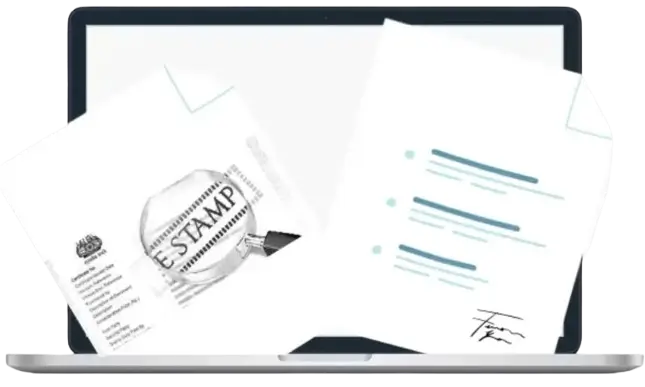
For decades, stamp duty payment in India was based on manual stamping procedures, such as physical stamp paper or franking. While legally legitimate, these solutions presented significant obstacles.
- Long lines and delays in administration
- Risk of counterfeit stamp sheets.
- A restricted supply and logistical difficulties.
- Conservation, monitoring, and verification might be difficult.
These inefficiencies grew more obvious as transaction volumes rose in response to economic expansion. The necessity to digitize stamping was obvious. eStamping arose as a safe alternative, enabling customers to pay stamp duty online and create tamper-proof digital certificates.
By substituting manual stamping with e-stamping online operations, India made a significant step in aligning legal compliance with its digital economy objectives.
What is eStamping, and how does it work?
eStamping is a government-approved way of paying stamp duty online. Instead of buying actual stamp paper, customers may create estamp paper online using authorized websites. Each eStamp certificate includes a unique identification number, transaction data, and security elements to prevent copying or fraud.
The process typically involves:
- Choosing the kind of document and the stamp duty value
- Making internet payments using safe methods.
- Create a digital e-stamp certificate.
- Applying the eStamp alongside the official document
This kind of digital stamping offers transparency, accuracy, and quick availability, which are crucial in high-volume corporate contexts.
Role of eStamping in Digitizing Legal and Financial Processes
In a digital economy, both efficiency and trust are of equal importance. eStamping enhances both through:
- Minimizing the turnaround time for agreements
- Mitigating hazards related to tangible stamp papers
- Facilitating the remote execution of documents
- Establishing verifiable audit records
Contemporary eStamping solutions integrate seamlessly with document management systems and compliance protocols. When integrated with electronic signing, organizations can achieve seamless, end-to-end digital execution of contracts without the need for physical involvement.
This is especially significant in industries such as finance, fintech, insurance, real estate, and corporate services, where substantial quantities of legally certified documents are produced on a daily basis.
eStamping and Digital Stamping in Key Sectors
Banking and Financial Services
Financial institutions and Non-Banking Financial Companies (NBFCs) predominantly depend on loan agreements, sureties, and affidavits. eStamping facilitates more rapid loan disbursals by eliminating delays associated with manual stamping. Digital stamp certificates also mitigate fraud risks and enhance regulatory compliance.
Real Estate
Property transactions necessitate accurate payment of stamp duty. eStamping guarantees transparency, diminishes the risk of counterfeiting, and facilitates verification for authorities and tribunals.
Corporate and MSME Sector
Businesses are increasingly reliant on eStamping solutions, spanning from incorporation documents to vendor contracts, to facilitate operational scaling, particularly within remote and hybrid work models.
e-signing: Completing the Digital Documentation Cycle
When combined with e-signing, eStamping goes beyond just digitizing stamp duties. Business contracts can be digitally stamped and legally executed using an e-signature.
Legally legitimate under Indian law are modern e-signing systems that provide Aadhaar-based and DSC-based signatures. Paperwork is reduced, user experience is enhanced, and transaction closings are accelerated with a full e-signing solution.
The foundation of paperless governance and digital commerce is e-stamping and e-signing.
Consolidated Electronic Signature and Stamping Systems: Developing Legal Processes with Scalability in Mind
Integrated eStamping and e-signing solutions are quickly becoming the go-to option for enterprises seeking unified digital documentation. Electronic stamping, digital stamping, and electronic signatures are all integrated into one streamlined process on these systems.
With integrated platforms, organizations can:
- Easy eStamp certificate generation
- Use secure electronic signatures to finalize papers.
- Ensure that compliance records are audit-ready
- Expand business activities to new areas and states
This kind of platform is crucial for India’s $5 trillion digital economy because it eliminates fragmentation, which allows businesses to concentrate on development while still guaranteeing legal stability.
E-Stamping Solutions to Overcome Digitalization Obstacles
Problems with cybersecurity, inadequate infrastructure, a lack of qualified workers, and worries about personal information are all obstacles on India’s path to digitalization. eStamping takes care of a few of these issues by
- Using protected, officially sanctioned systems
- Minimizing the need for human oversight and mistakes
- Encouraging adherence to standards for data protection
- Making verification more open and accessible
The confidence of individuals, companies, and regulators is enhanced when advanced eStamping solutions are combined with reliable platforms.
TRUESigner ONE: Facilitating Comprehensive End-to-End Solutions eStamping and Electronic Signing at Scale
Although eStamping establishes the legal framework for digital transactions, its true significance is achieved when integrated into a streamlined execution process. TRUESigner ONE is specifically engineered to serve this purpose—integrating eStamping, digital stamping, and legally compliant e-signing within a singular, cohesive platform.
TRUESigner ONE empowers organizations to acquire and utilize eStamp documents seamlessly across various Indian states without the need to navigate disparate state-specific systems. Users have the ability to specify the relevant jurisdiction, stamp duty amount, and document type directly within the platform. The chosen eStamp certificate is promptly integrated into the agreement, guaranteeing precision, adherence to regulations, and enforcement of single-use.
What distinguishes TRUESigner ONE is its integrated governance and control framework. Each eStamp utilized is entirely traceable via an audit trail, thereby preventing reuse and assuring comprehensive transparency of stamp utilization. Automated notifications inform teams when stamp inventories are nearing depletion, preventing last-minute delays in high-volume transaction settings such as lending, insurance enrollment, vendor agreements, and enterprise contracting.
Once certified, documents may be executed electronically through Aadhaar-based eSign or digital signature certificates (DSC), thereby concluding the entire documentation process without the need for paper, physical presence, or manual intervention. This comprehensive approach enables organizations to transition seamlessly from document initiation to legally binding execution within minutes—facilitating remote operations, expediting closures, and ensuring regulatory compliance.
In the context of India’s $5 trillion digital economy, platforms such as TRUESigner ONE elevate eStamping from a mere compliance obligation to a strategic asset—empowering enterprises to expand confidently while ensuring legal validity, audit readiness, and future resilience.
Prospects for eStamping in India's Emerging Digital Market
The need for scalable legal infrastructure is expected to increase with the pace of 5G, AI, and automation. More document types, states, and use cases will likely be added to eStamping in the future. Digital stamping and e-signing are becoming more popular in India, ushering in a future where all legal compliance is quick, digital, and seamless.
This transformation will be greatly aided by integrated eStamping and e-signing systems, which provide solutions that are safe, scalable, and prepared for the future.
Conclusion
The foundation of India’s ambitious $5 trillion digital economy plan is innovation, scalability, and speed, but the sustainability of this plan hinges on the stability of trust and the clarity of the law. The need of having solid digital documentation is becoming more apparent as cutting-edge technologies like cloud computing, automation, AI, and digital public infrastructure transform the way economic activity is carried out. By integrating legitimacy into digital transactions and updating stamp duty compliance, eStamping meets this essential need. As India moves closer to a digitally driven economy, this will ensure that the enforcement of laws keeps up with technology.
With eStamping, high-volume commercial transactions are made easier by replacing human stamping with safe digital stamping devices. It facilitates smooth remote transactions in industries like banking, real estate, insurance, and corporate services, speeds up contract execution, and decreases operational delays and fraud threats. To meet the needs of today’s tech-driven economy, eStamping, when combined with electronic signature and digital processes, forms a fully paperless, audit-ready environment. As a result of these developments, compliance will no longer be a hindrance to progress but an enabler of it.
In the end, eStamping is a crucial cog in India’s digital transformation wheel. In an increasingly digitized and linked world, it provides the legal robustness needed, boosts confidence in institutions, and encourages inclusive engagement across geographies. With eStamping as its legal foundation, India’s digital economy will be able to foster innovation, protect integrity, and ensure that economic development is based on certainty and trust as it moves closer to its $5 trillion goal.
FAQ
When legal papers are digitally e-stamped, the stamp duty is paid electronically using approved internet channels, and a secure eStamp certificate is produced.
Once applied correctly to a document, an eStamp remains valid in accordance with the relevant state regulations and does not expire.
Electronic stamps really save processing time since they eliminate the need to physically purchase, physically visit, and manually validate a stamp.
If produced via approved channels, electronic stamp paper is legitimate and accepted in Indian courts.