Blog Summary:
Document execution remains a critical operational layer for Indian enterprises as they accelerate their digital transformation, with direct implications for compliance, revenue cycles, and governance. Aadhaar eSign has emerged as a secure, legally recognized, and scalable solution for digital document signing that does not rely on physical Digital Signature Certificates (DSC). This blog provides a detailed explanation of Aadhaar eSign, including its legal validity, implementation architecture, security framework, and enterprise use cases. It also looks at how platforms like TRUESigner ONE use Aadhaar eSign API capabilities to create compliant, enterprise-grade document execution workflows.
Introduction
India’s digital economy is built on trusted digital infrastructure. Aadhaar, as a foundational identity system, has enabled secure electronic authentication across banking, telecom, Government services, and financial technology. Building on this identity layer, Aadhaar eSign allows individuals and businesses to digitally execute documents with legal validity.
For businesses, document signing is more than just a clerical task; it is a governance function. Contracts, human resources documents, compliance filings, vendor agreements, board resolutions, and loan documentation all require legally binding signatures. Delays in signing lead to bottlenecks in procurement, onboarding, fundraising, and regulatory compliance.
Traditional physical signatures and token-based DSC methods cause operational friction. Aadhaar eSign Online offers a secure, compliant, and efficient alternative. It allows organizations to sign documents online using Aadhaar authentication, eliminating the need for hardware tokens while ensuring legal enforceability.
Understanding how the Aadhaar digital signature online works is essential for compliance teams, IT leaders, and operations heads looking to digitize workflows.
What is Aadhaar eSign and How Does It Work?
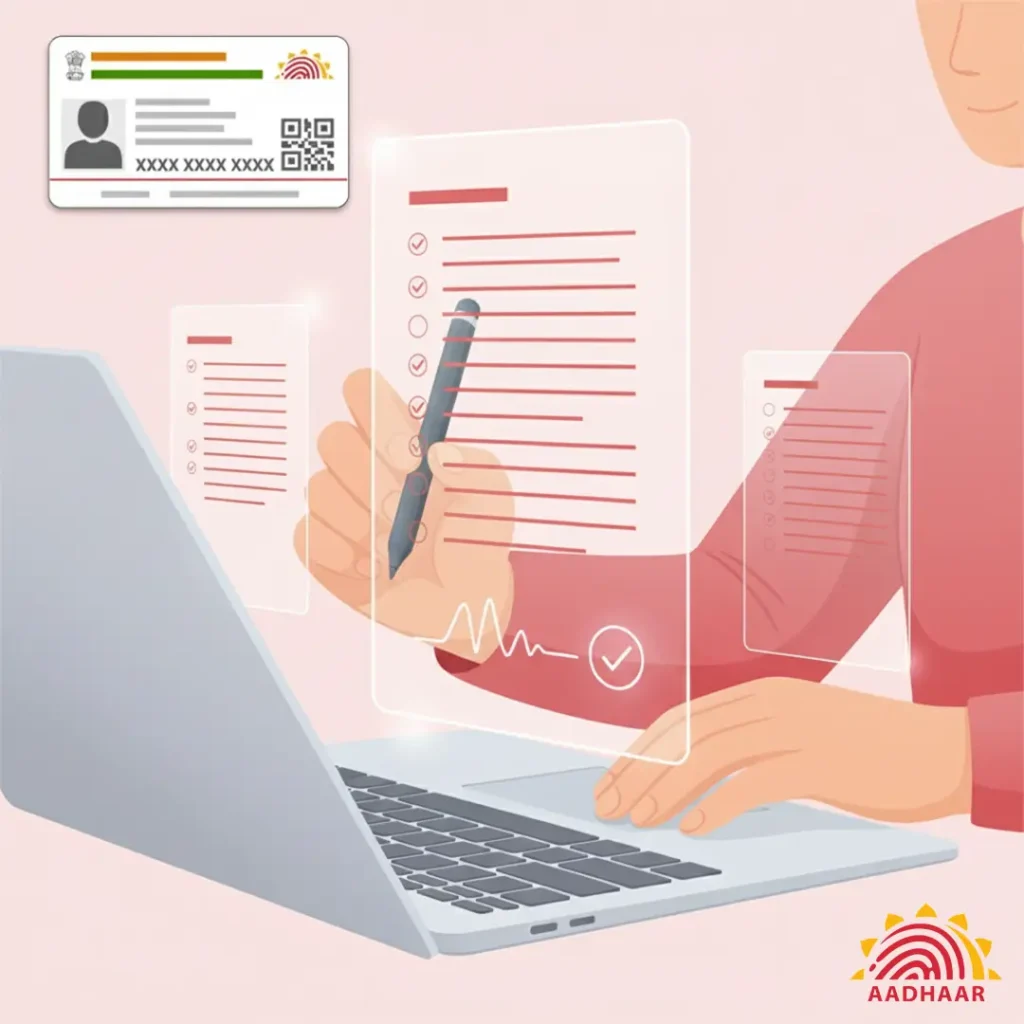
Aadhaar eSign is a government-recognized electronic signature framework in India that allows an Aadhaar holder to digitally sign electronic documents using Aadhaar-based authentication.
Unlike conventional Digital Signature Certificates that require pre-issued credentials stored in physical USB tokens, Aadhaar-based eSign operates on a transaction-level certificate issuance model. A one-time digital certificate is generated at the time of signing after successful authentication.
The process involves the following architecture components:
- Aadhaar authentication through OTP or biometric verification
- Licensed Certifying Authority issuing a digital signature certificate
- Aadhaar eSign service provider facilitating secure integration
- Cryptographic hashing and encryption to ensure document integrity
When a user chooses to eSign with Aadhaar, the document hash is securely transmitted to the Certifying Authority via the Aadhaar eSign API. Upon OTP verification linked to the Aadhaar-registered mobile number, the digital signature is generated and embedded in the document.
The result is a tamper-evident, legally valid Aadhaar digital signature that complies with the Information Technology Act.
Step-by-Step Process to Sign a Document Online with Aadhaar
To sign a document online with Aadhaar, the following operational flow typically applies:
A document is uploaded to a compliant digital signing platform such as TRUESigner ONE. The signer’s identity and contact details are entered into the system.
The signer receives a secure link via email or SMS. Upon accessing the document, the signer selects Aadhaar-based eSign as the authentication method.
The system prompts the user to enter their Aadhaar number or Virtual ID. An OTP is sent to the Aadhaar-linked mobile number registered with UIDAI.
After successful OTP validation, the Aadhaar digital signature online is generated by a licensed Certifying Authority and applied to the document.
The final signed document contains:
- Embedded digital signature certificate
- Timestamp
- Audit trail
- Verification details
The complete Aadhaar eSign online process typically takes less than five minutes.
Is Aadhaar eSign Safe?
Security is a critical factor in digital execution workflows. Aadhaar eSign is built on a multi-layered security framework that ensures identity validation, encryption, and document integrity.
Identity verification is conducted through UIDAI authentication mechanisms. The OTP is delivered only to the Aadhaar-registered mobile number, ensuring user consent.
The digital certificate issued during signing is generated through licensed Certifying Authorities operating under regulatory oversight.
Cryptographic hashing ensures that if a document is altered after signing, the signature becomes invalid. This ensures tamper detection.
Additionally, authorized Aadhaar eSign service providers must comply with stringent operational and technical guidelines.
When implemented through enterprise-grade platforms like TRUESigner ONE, additional safeguards such as encrypted storage, access controls, and detailed audit logs further enhance security.
Legal Validity of Aadhaar Digital Signature in India
Aadhaar eSign qualifies as a legally valid eSign in India under the Information Technology Act, 2000.
The IT Act recognizes electronic signatures issued through prescribed procedures as legally enforceable. Since Aadhaar eSign involves identity authentication and digital certificate issuance by licensed authorities, it meets legal requirements for validity.
Documents signed using Aadhaar digital signature are admissible in court, provided they comply with procedural guidelines and are executed via authorized Aadhaar eSign service providers.
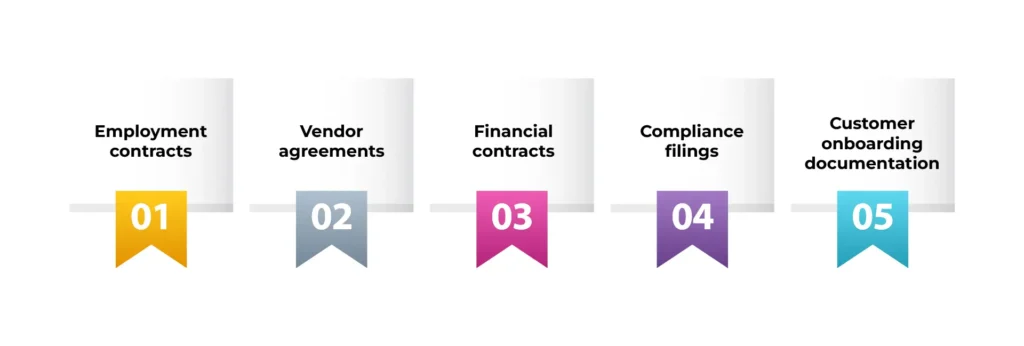
For enterprises, this legal recognition enables digital execution of:
- Employment contracts
- Vendor agreements
- Financial contracts
- Compliance filings
- Customer onboarding documentation
Legal enforceability makes Aadhaar eSign for India suitable for regulated industries.
Who provides Aadhaar eSign Services?
Aadhaar eSign services are delivered through authorized Aadhaar eSign service providers licensed to integrate with UIDAI and Certifying Authorities.
These providers operate under compliance guidelines and facilitate secure digital certificate issuance.
Enterprises typically do not integrate directly with UIDAI. Instead, they use digital signing platforms that embed Aadhaar e-Sign API integration.
Platforms such as TRUESigner ONE provide enterprise access to Aadhaar eSign capabilities while abstracting technical complexity.
This integration ensures that organizations can deploy Aadhaar eSign online workflows without managing compliance infrastructure internally.
Can You Sign Documents Online Without DSC?
Yes. Aadhaar-based eSign eliminates the requirement for physical Digital Signature Certificates in many scenarios.
Traditional DSC tokens require hardware, driver installations, and periodic renewals. They are often mandatory for certain high-security government filings.
However, for most contractual, HR, financial, and operational documentation, online signature with Aadhaar provides a compliant alternative.
The transaction-based certificate issuance model simplifies credential management and reduces operational dependency.
For startups, SMEs, and enterprises digitizing contract management, this flexibility is valuable.
How Long Does Aadhaar eSign Take?
The Aadhaar eSign process is designed for efficiency.
Authentication through OTP typically takes seconds. Digital certificate generation and document signing are completed within minutes.
Bulk signing workflows can be automated using Aadhaar e-Sign API integrations within enterprise systems.
By eliminating manual coordination and physical document exchange, Aadhaar eSign online significantly reduces turnaround time.
How Long Does Aadhaar eSign Take?
The Aadhaar eSign process is designed for efficiency.
Authentication through OTP typically takes seconds. Digital certificate generation and document signing are completed within minutes.
Bulk signing workflows can be automated using Aadhaar e-Sign API integrations within enterprise systems.
By eliminating manual coordination and physical document exchange, Aadhaar eSign online significantly reduces turnaround time.
Can Multiple People Sign Using Aadhaar eSign?
Yes. Aadhaar eSign supports multi-party execution workflows.
Digital signing platforms allow sequential or parallel signing configurations. Each signer authenticates independently using their Aadhaar credentials.
The audit trail records each step, including the timestamp and authentication status.
For enterprises managing board resolutions, partnership agreements, or vendor contracts, multi-signer workflows are essential.
TRUESigner ONE enables configurable signing sequences integrated with Aadhaar digital signature functionality.
Is Aadhaar eSign Valid for Government Tenders and Filings?
Aadhaar eSign is legally recognized; however, acceptance for specific government tenders depends on departmental requirements.
Certain portals mandate Class 3 DSC tokens for high-security submissions. Others accept electronic signature India frameworks, including the Aadhaar digital signature.
Organizations should review tender documentation before submission.
As regulatory confidence in Aadhaar eSign for India grows, adoption continues to expand across government and semi-government institutions.
Enterprise Implementation Using TRUESigner ONE
Digital execution at scale requires more than signature capability. Enterprises need workflow orchestration, compliance tracking, audit readiness, and system integration.
TRUESigner ONE integrates Aadhaar eSign API functionality with enterprise contract workflows.
The platform enables:
- Secure Aadhaar-based eSign execution
- Multi-user role management
- Bulk document processing
- Audit trail management
- Regulatory compliance alignment
By embedding Aadhaar digital signature online capabilities within document lifecycle management, TRUESigner ONE reduces operational overhead and accelerates business cycles.
Enterprises benefit from:
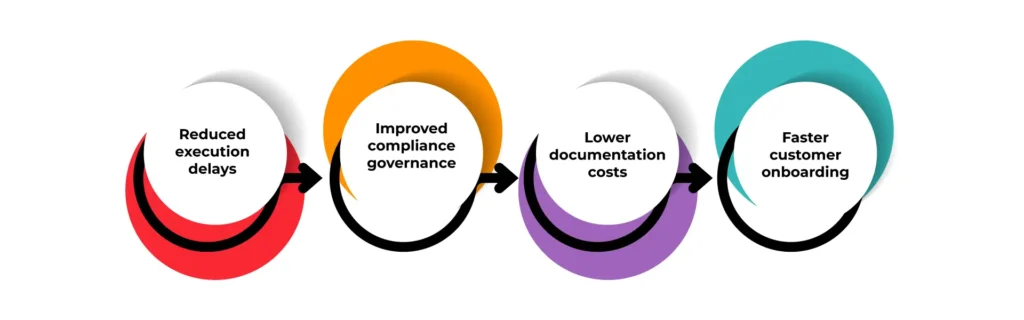
- Reduced execution delays
- Improved compliance governance
- Lower documentation costs
- Faster customer onboarding
For organizations managing high document volumes, this operational efficiency directly impacts revenue realization and regulatory readiness.
Conclusion
Aadhaar eSign represents a critical evolution in India’s digital execution ecosystem. It combines identity verification, encryption, and regulated certificate issuance to deliver a secure and legally valid signing framework.
For businesses, Aadhaar-based eSign reduces friction in contract management, accelerates onboarding processes, and enhances compliance readiness.
The ability to sign a document online with Aadhaar eliminates hardware dependencies while maintaining regulatory integrity. When deployed through enterprise platforms such as TRUESigner ONE, organizations gain scalable, secure, and compliant digital execution capabilities powered by Aadhaar e-Sign API integration.
As Indian enterprises continue to modernize operations, Aadhaar eSign online will remain a foundational component of digital governance and transaction management.
Digital execution is no longer optional. It is an operational infrastructure.
FAQ’s
Aadhaar eSign is a legally recognized electronic signature framework in India that enables Aadhaar holders to digitally sign documents through OTP authentication and licensed certificate issuance.
Yes. It uses UIDAI authentication, cryptographic encryption, and regulated certificate issuance processes.
Authorized Aadhaar eSign service providers licensed under regulatory frameworks deliver the service, often integrated into enterprise platforms.
Yes. Aadhaar-based eSign removes the need for physical DSC tokens in many business use cases.
The process typically takes under five minutes.
Yes. It qualifies as a legally valid eSign India under the IT Act.
Yes. Multi-signer workflows are supported.
Acceptance depends on department-specific requirements, though legal recognition is established.